Stitching the Happy Burger: A Designer’s Take
As a designer who has spent countless hours digitizing and stitching out thousands of patterns, I have developed a keen eye for what translates well from screen to fabric. When I first encountered the Happy Burger with Ok Hand Gesture. Funny, my initial reaction was one of amused curiosity. It is not your typical floral motif or standard monogram. This piece belongs to the world of Illustrations and Graphics that rely on personality rather than intricate realism. For embroidery professionals, hobbyists, and Etsy sellers, understanding how such a character-driven design behaves under the needle is crucial before committing to a final product.
First Impressions and Visual Personality
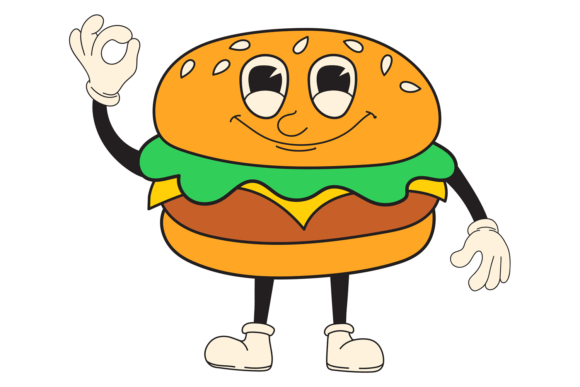
The design features a retro comic aesthetic, which immediately sets a playful tone. The burger is anthropomorphized with a cheerful expression and an "OK" hand gesture, creating a mood that is both nostalgic and modern. From a layout perspective, the isolation on a white background in the source files suggests clean lines and distinct shapes. For us in the trade, this is promising. Clean vectors in EPS and SVG formats usually mean fewer stray nodes and smoother digitizing potential. However, seeing it as a JPG or transparent PNG requires a different mental approach. We must imagine how those solid blocks of color will translate into thread.
The visual personality here is bold. It does not whisper; it shouts fun. This makes it an excellent candidate for projects where the goal is to elicit a smile. Whether you are creating a handmade product for a local craft fair or listing a small shop product online, the immediate recognizability of the burger shape combined with the universal "OK" sign creates instant engagement. It bridges the gap between foodie culture and positive affirmations, a niche that performs surprisingly well in contemporary apparel.
Real-World Application: The Custom Tote Scenario
Let us consider a practical scenario. Imagine a client requests a custom tote bag design for a local burger joint’s anniversary event. They want something quirky but professional. This is where the Happy Burger with Ok Hand Gesture. Funny shines. Unlike complex photographic images that require thousands of stitches and dense fill areas, this graphic style relies on broader shapes.
When planning this embroidery project, I would likely choose a sturdy canvas tote. The texture of the canvas provides a stable base for the stitches. Because the design is isolated and likely has clear boundaries, it allows for creative use of thread colors. You might opt for traditional sesame seed beige, lettuce green, and ketchup red, or you could go abstract with pastel tones for a boutique feel. The key is ensuring the contrast remains high enough so the "OK" hand gesture is clearly visible against the burger body. If the details are too subtle, they may get lost in the fabric weave.
Performance on Various Fabrics and Items
Versatility is a major selling point for any digital embroidery file. This design appears robust enough to handle various applications. For sweatshirt embroidery, the thicker fabric can support heavier stitch densities without puckering, provided you use the correct stabilizer. A cut-away stabilizer would be my recommendation here to maintain the integrity of the design after multiple washes.
However, caution is needed when applying this to baby embroidery items. While the cute factor is high, babies have sensitive skin. If the design uses dense fill stitch areas for the burger bun or patty, it might feel stiff against delicate skin. In such cases, considering an applique design approach could be beneficial. By using fabric pieces for the main shapes and only stitching the outlines and facial features, you reduce the amount of thread on the back, making the personalized gift softer and more comfortable.
For custom apparel like t-shirts, which are often made of stretchy jersey knits, hoop stability is critical. The rounded nature of the burger helps, but the extended hand gesture creates an asymmetrical balance. You must ensure your hooping technique prevents distortion. Testing on scrap fabric is non-negotiable here. Check if the stitch density causes the fabric to pull or gather. If the original graphic is very detailed, you may need to simplify certain elements during the digitizing phase to prevent thread breaks or bird nests.
Navigating Technical Challenges
Every design has its pitfalls. With the Happy Burger with Ok Hand Gesture. Funny, the primary concern is scale. If you attempt to shrink this design for a small embroidered patch or a cap front, the fine details of the face and the fingers of the hand gesture may merge. Satin stitch works well for borders, but if the internal details are too small, they should be converted to running stitches or omitted entirely for clarity.
Dark fabrics present another challenge. Since the design is described as isolated on white, you must ensure your digitized version accounts for background coverage if the burger itself is light-colored. Without proper underlay stitches or a background fill, the design might look sparse on black or navy garments. Always review your design in a black-and-white mockup to check for contrast issues before loading it onto the machine.
Commercial Viability and Brand Consistency
For Etsy sellers and craft business owners, this type of design asset offers strong commercial potential. It fits well within trends that favor humor and retro vibes. When used in commercial embroidery, it can elevate a basic item into a statement piece. However, professionalism is key. Ensure that the finished product looks polished. Loose threads or misaligned stitches can undermine the humorous intent, making the item look cheap rather than charming.
Before selling any finished product or using this as part of your brand’s visual identity, verify the licensing terms. The product description mentions EPS, JPG, SVG, and transparent PNG files. These are typically vector or raster graphics, not necessarily native embroidery machine files like PES or DST. You will likely need to digitize these graphics yourself or hire a digitizer. This step is crucial because auto-digitizing software often fails to capture the nuance of comic-style art. Manual digitizing allows you to control the stitch direction, ensuring the burger looks round and the hand gesture looks natural.
Final Thoughts for the Maker
In conclusion, the Happy Burger with Ok Hand Gesture. Funny is a delightful addition to any designer’s library of Illustrations and Graphics. Its strength lies in its simplicity and emotional appeal. By paying attention to fabric choice, stabilizer selection, and stitch density, you can transform this digital image into a high-quality physical item. Whether it ends up on a holiday embroidery gift, a daily-use apron, or a trendy cap, the success of the project depends on your technical execution. Treat it with the same care you would give a complex portrait, and it will reward you with a product that customers love to wear and share.